
For many Australians living with disability, keeping a home clean is not simply another item on the weekend to-do list. Tasks such as vacuuming, mopping, bathroom cleaning or changing linen can become difficult when mobility, energy, coordination or other disability-related needs get in the way. That is where NDIS cleaning services can become a practical part of maintaining independence at home.
In Mount Gambier, the right cleaning support can mean more than having a spotless kitchen. It can help you maintain a safe, comfortable home while allowing you to spend more time working, studying, connecting with people or simply enjoying your own space. If you are exploring household support options, you can contact Hour People to discuss what type of assistance may suit your circumstances.
But there is an important distinction. NDIS-funded cleaning is not automatically the same as booking an ordinary house cleaner and putting the bill through your plan. The support generally needs to relate to your disability needs and meet the relevant NDIS funding rules. The NDIS explains that core supports can include help with everyday tasks such as cleaning, depending on an individual participant’s plan and circumstances.
So, what exactly can cleaning support include? And how do you know whether a service is appropriate for your NDIS plan? Let’s break it down without turning the explanation into a bureaucratic maze.
What Are NDIS Cleaning Services?
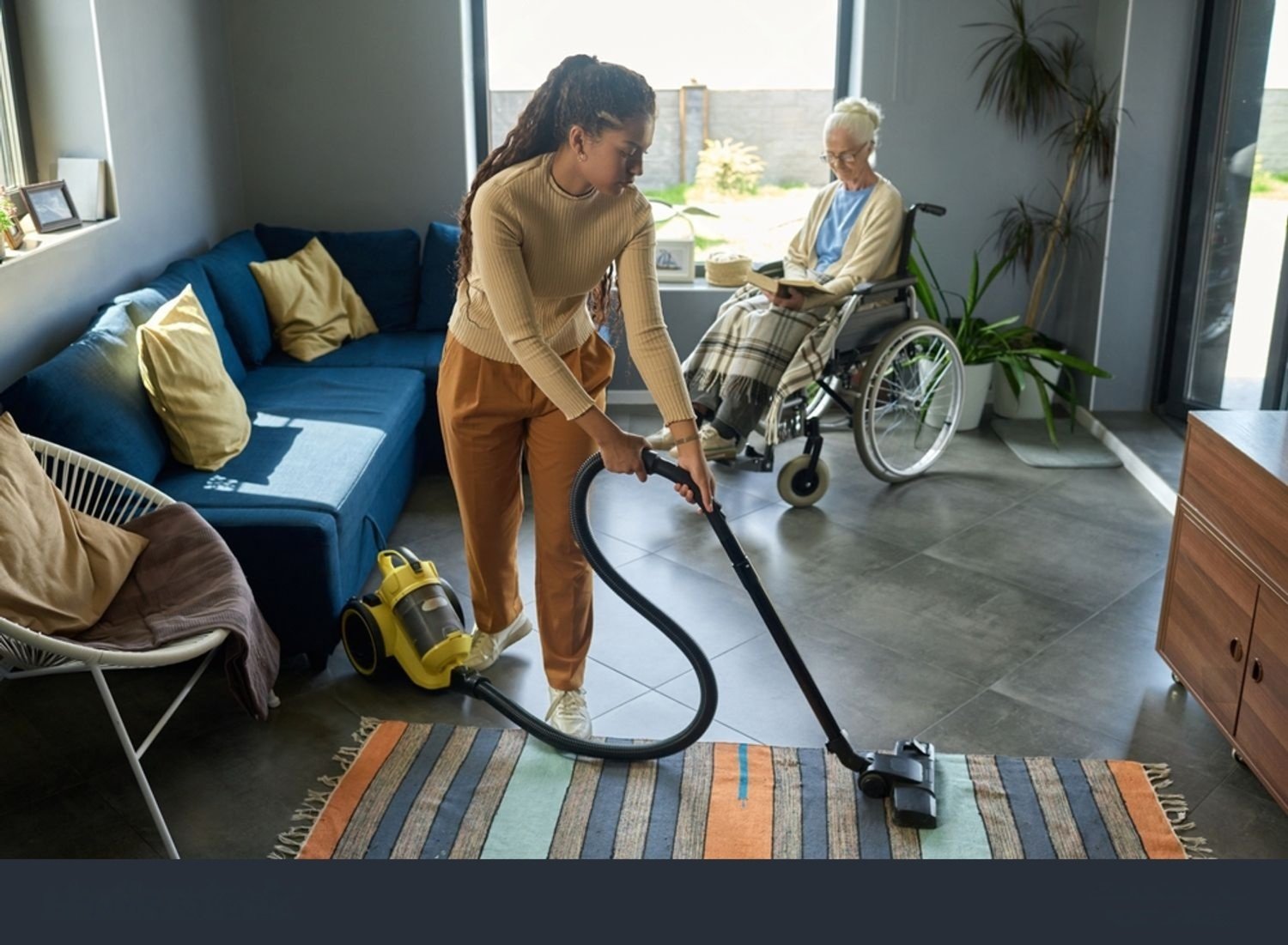
NDIS cleaning services are cleaning and household assistance provided to an NDIS participant when cleaning tasks are connected to their disability-related support needs and are funded under their plan.
The NDIS describes assistance with household tasks as support that can help participants maintain their home environment, including essential household cleaning activities they are unable to undertake themselves.
That wording matters. The purpose is not simply to give every participant a free general house-cleaning service. Instead, the cleaning support should address a genuine disability-related barrier. For one person, that might mean difficulty vacuuming because of mobility limitations. For another, it could mean needing assistance with bathroom cleaning, laundry or other essential household tasks.
This is why NDIS cleaning services can look slightly different from one participant to another. Your home, your abilities, your support needs and your plan all matter.
What Do NDIS Cleaning Services Include?
The exact tasks depend on the participant’s needs, the agreed service and the relevant funding arrangements. In general, NDIS household cleaning may focus on essential tasks required to maintain a reasonable standard of cleanliness in the home.
Common examples can include vacuuming floors, sweeping, mopping, dusting accessible surfaces, cleaning bathrooms, cleaning kitchen surfaces and managing other basic household cleaning tasks that the participant cannot reasonably complete because of their disability.
The NDIS also recognises assistance with household tasks as part of everyday support. Its current guidance explains that support workers can help participants with tasks such as cleaning and laundry, depending on the participant’s goals and funding.
However, a cleaner should not assume that every task in the house is automatically an NDIS-funded support. The service should be connected to the participant’s circumstances and the funding available.
That distinction keeps the service practical, transparent and aligned with the purpose of the NDIS.
Common Tasks Covered by NDIS Cleaning Services Mount Gambier
When people search for NDIS cleaning services Mount Gambier, they are often looking for straightforward help with the jobs that keep a home functioning day to day.
A typical household cleaning arrangement may involve cleaning floors, bathrooms and kitchens, dusting surfaces and dealing with general household dirt. Depending on the participant’s needs, the service may also involve other essential household tasks.
The focus should be on what the participant cannot reasonably do themselves because of disability-related limitations. It is not necessarily about cleaning every decorative object, reorganising cupboards or completing a long list of optional chores.
Some commonly requested tasks include:
- Vacuuming carpets, rugs and accessible floor areas.
- Sweeping and mopping hard floors.
- Cleaning toilets, showers, baths, basins and bathroom surfaces.
- Cleaning kitchen benches, sinks and accessible surfaces.
- Dusting furniture and commonly used areas.
- Assisting with essential household cleaning tasks.
- Supporting basic laundry-related household activities where appropriate.
The precise scope should always be agreed before the service begins. A good provider should explain what is included rather than leaving you guessing.
NDIS House Cleaning Mount Gambier: What Makes It Different?
At first glance, NDIS house cleaning Mount Gambier may look exactly like ordinary residential cleaning. A vacuum cleaner is still a vacuum cleaner, after all.
The difference is the purpose of the support.
Ordinary house cleaning is generally a private household expense. NDIS-funded cleaning, where applicable, is intended to address disability-related support needs. The NDIS states that funded supports must relate to a participant’s disability, help them pursue their goals and meet the reasonable and necessary criteria.
This means the provider needs to understand that the participant is not simply outsourcing chores because they dislike cleaning. The support may be helping them maintain independence and manage essential household activities that are difficult or impossible for them to perform independently.
That distinction is particularly important when choosing between general house cleaners and professional NDIS cleaners.
How NDIS Cleaning Support Can Help With Independence
A clean home is not just about appearances. It is also about being able to live comfortably and safely in your own environment.
For someone with a disability, struggling to maintain floors, bathrooms or kitchen surfaces can gradually affect everyday life. A task that takes another person fifteen minutes may require significantly more effort, planning or physical ability for someone else.
This is where NDIS support cleaning can play a useful role. The aim can be to remove a disability-related barrier while helping the participant continue living as independently as possible.
The NDIS explains that Assistance with Daily Life can support everyday activities in the home, including cleaning and cooking, with a focus on helping participants live as independently as possible.
That is an important point: good support should fit into a person’s life rather than take over it.
NDIS Cleaning Services and Bathrooms

Bathrooms deserve special attention because they combine moisture, slippery surfaces and regular daily use. For a participant with mobility limitations or difficulty bending, reaching or standing for extended periods, bathroom cleaning can become particularly challenging.
NDIS cleaning services may include essential bathroom tasks such as cleaning toilets, basins, showers, baths, mirrors and accessible surfaces when those tasks are part of the participant’s appropriate household support.
The cleaner may also vacuum, sweep or mop bathroom floors according to the property’s flooring and the agreed cleaning routine.
Safety should remain central. Cleaning products should be used appropriately, surfaces should be treated according to their material, and the cleaner should understand any relevant accessibility or mobility considerations.
This is one reason professional experience matters. Cleaning is not just about making something shine. Sometimes the safest and most useful approach is the simplest one.
NDIS Household Cleaning for Kitchens and Living Areas
The kitchen is another area where NDIS household cleaning can provide practical assistance. Food preparation naturally creates crumbs, spills, grease and surface residue, while floors can collect dirt surprisingly quickly.
Depending on the agreed support, cleaning may involve kitchen benches, sinks, stovetops, accessible surfaces and floors. Living areas may receive vacuuming, mopping and dusting so the participant can maintain a comfortable everyday environment.
The key word is essential.
NDIS-funded household assistance is not necessarily designed to cover every optional cleaning or home-maintenance task. The NDIS states that funded supports need to be related to disability support needs and cannot simply be ordinary day-to-day living costs unrelated to those needs.
That makes clear communication particularly valuable. Before the first visit, discuss what needs to be done, why assistance is required and what the provider can reasonably include.
NDIS Domestic Cleaning Services vs Regular House Cleaning
It is easy to mix up NDIS domestic cleaning services with standard residential cleaning. The services can overlap in the actual cleaning techniques, but the funding purpose is different.
| Area | Standard house cleaning | NDIS domestic cleaning |
| Main purpose | General household maintenance | Assistance with disability-related household needs |
| Typical tasks | Dusting, vacuuming, mopping and bathroom cleaning | Essential household cleaning the participant cannot reasonably complete |
| Funding | Usually privately paid | May be funded where it meets NDIS requirements |
| Personalisation | Based on household preference | Based on participant needs and plan |
| Provider considerations | Cleaning quality and reliability | Cleaning quality plus appropriate NDIS processes |
The important thing is not to assume that a service becomes NDIS-funded simply because a participant books a cleaner. Funding depends on the participant’s plan and the applicable NDIS rules.
The NDIS currently explains that each plan is based on individual needs and that not every participant has funding in every support budget or category.
Do NDIS Cleaning Services Cover Deep Cleaning?
This is one of the questions worth asking before booking.
NDIS cleaning services are generally focused on essential household cleaning related to the participant’s support needs. That does not automatically mean every deep-cleaning task is covered.
A major spring clean, exterior pressure washing, extensive decluttering or highly specialised cleaning may fall outside the ordinary scope of essential household cleaning, depending on the circumstances.
For example, if a participant requires routine assistance to keep essential living areas clean, that is quite different from requesting a once-a-year luxury deep clean of every cupboard and decorative surface.
The safest approach is to discuss the exact tasks with the provider and confirm whether they are appropriate under the participant’s funding arrangements before work begins.
NDIS Cleaning Providers Mount Gambier: What Should You Look For?
Choosing among NDIS cleaning providers Mount Gambier should involve more than comparing hourly rates.
You want a provider that understands disability support, communicates clearly and treats the participant’s home and privacy with respect. Reliability matters too. A missed cleaning visit can be much more disruptive when the service is part of someone’s regular support routine.
Look for a provider that can clearly explain the service, establish expectations and work respectfully within the participant’s home. It is also useful to confirm whether the provider is registered if registration is required by the participant’s plan management arrangement.
According to the NDIS, participants with NDIA-managed plans must use registered providers. Participants who are self-managed or plan-managed can usually choose registered or unregistered providers, although some exceptions apply.
That makes checking your plan management type an important step before making a decision.
How Often Do You Need NDIS Cleaning Services?
There is no single cleaning schedule that works for everyone.
Some participants may need regular weekly assistance because cleaning tasks are consistently difficult. Others may need support fortnightly or according to a different routine based on their individual circumstances.
The NDIS considers the amount and frequency of a support when assessing whether it is reasonable and necessary.
Your cleaning schedule should therefore reflect actual need rather than an arbitrary routine.
A good provider can help establish a practical cleaning routine around the participant’s priorities. For example, bathrooms and floors may need regular attention, while other areas can be addressed less frequently.
The goal is a home that remains manageable without creating unnecessary support.
NDIS Home Cleaning Services and Participant Choice
One of the strongest benefits of NDIS home cleaning services is the potential for participant choice.
Your home is personal. The person providing cleaning support is entering your private space, so comfort, communication and respect are not minor details.
A participant should be able to communicate preferences around timing, priorities, routines and how tasks are approached, subject to the relevant service and funding arrangements.
The NDIS also explains that participants can choose providers, with the available choice depending partly on how their plan is managed.
That means choosing a provider should feel more like finding the right working relationship than simply ordering a service online.
Disability Cleaning Services Mount Gambier and Accessibility
Disability cleaning services Mount Gambier should take the participant’s individual circumstances seriously.
For example, a person using mobility equipment may have specific pathways that need to remain clear. Someone with limited reach may need assistance with surfaces that are difficult to access. Another participant may have particular preferences around cleaning products or the order in which tasks are completed.
These details can make a significant difference.
Professional NDIS cleaners should listen before they clean. A five-minute conversation about the participant’s needs can prevent misunderstandings and make the service much more effective.
The NDIS emphasises that supports should be tailored to individual circumstances and disability-related needs rather than treated as identical services for every participant.
Are NDIS Cleaning Services Funded for Every Participant?
No. This is one of the most important points to understand.
NDIS cleaning services are not automatically available to every NDIS participant simply because they have an NDIS plan. Funding depends on the participant’s individual circumstances, plan, support needs and applicable funding rules.
The NDIS says supports must meet the reasonable and necessary criteria. They must relate to the person’s disability, help them pursue their goals, be value for money, be effective and beneficial, and meet other relevant requirements.
This is why a provider should not promise that every cleaning request will be funded.
If you are unsure, check your plan and speak with your NDIS contact, support coordinator or plan manager as appropriate. The NDIS also recommends working with your support network when identifying suitable providers.
NDIS Cleaning Support and the Importance of Respect
A cleaner entering someone’s home is entering their personal environment. For an NDIS participant, that relationship can be even more important because the support may happen regularly.
Professionalism should therefore go beyond arriving with equipment and getting through a checklist.
A respectful cleaner should communicate clearly, protect privacy, listen to instructions and treat the participant as an active decision-maker. They should understand that the participant’s home is not a workplace where personal preferences suddenly disappear.
This human side of NDIS cleaning services is easy to overlook when people focus only on funding categories and cleaning checklists.
But in real life, trust matters enormously.
How to Choose Professional NDIS Cleaners in Mount Gambier
When comparing professional NDIS cleaners, start with the basics: experience, communication, availability, service scope and whether the provider fits your plan-management requirements.
Ask what cleaning tasks are included, how appointments are scheduled, whether the same team can attend regularly and how the provider handles changes or cancellations.
It is also worth asking how the provider approaches participant preferences. If you have particular accessibility requirements or cleaning priorities, explain them early rather than hoping the cleaner will discover them through telepathy.
The NDIS recommends researching providers, checking reviews and discussing your needs with the provider before starting services.
For people searching for local NDIS cleaning services, that initial conversation can tell you a lot about whether the provider is a good fit.
Why Local NDIS Cleaning Services Can Make Sense
Choosing local NDIS cleaning services in Mount Gambier can be convenient when you need reliable recurring support.
Local availability may make scheduling easier and can be particularly useful when cleaning is part of a broader routine involving support workers, appointments, work or study.
For young professionals living with disability, reliable household assistance can also help create more predictable weeks. Instead of spending limited energy tackling difficult household chores, you can direct that energy towards work, social activities, hobbies or simply having a quiet evening.
That is ultimately what effective support should do: make everyday life more manageable.
How to Get Started With NDIS Cleaning Support
If you are considering NDIS cleaning support, begin by identifying the household tasks you struggle to complete because of your disability-related needs.
Then review your plan and understand how your relevant funding is managed. If you are unsure whether cleaning is covered or how a support should be arranged, speak with your NDIS contact, support coordinator or plan manager.
Next, compare suitable providers. Ask about their experience, availability, cleaning scope, provider registration where relevant and how they work with participant preferences.
Finally, agree on the service before it starts. Clear expectations make everything easier, from the first clean to the tenth.
The NDIS’s current guidance confirms that participants can use core support funding for everyday activities such as cleaning when the support is appropriate to their plan and circumstances.
Conclusion
NDIS cleaning services can provide valuable household assistance for participants who have disability-related barriers that make essential cleaning tasks difficult or impossible to complete independently. Depending on the participant’s needs and funding, support may include vacuuming, mopping, bathroom cleaning, kitchen cleaning, dusting and other essential household activities. The key is understanding that NDIS-funded cleaning is based on individual circumstances rather than being an automatic entitlement to general house cleaning. Supports must meet the relevant NDIS funding criteria and align with the participant’s plan.
If you are looking for practical, respectful household assistance in Mount Gambier, choosing the right provider can make everyday life considerably easier. Hour People can help you discuss your requirements and understand what type of cleaning support may suit your circumstances. If you would like to explore your options, contact Hour People and start the conversation about reliable household cleaning support.
Frequently Asked Questions
1. What are NDIS cleaning services?
NDIS cleaning services are household cleaning supports provided to NDIS participants where cleaning assistance relates to their disability support needs and is covered under the relevant funding arrangements. They can include essential tasks such as vacuuming, mopping, bathroom cleaning, kitchen cleaning and other household activities the participant cannot reasonably complete themselves.
2. Can NDIS cleaning services include regular house cleaning?
Yes, regular household cleaning can be part of an NDIS support arrangement where the cleaning is an appropriate disability-related support and is funded under the participant’s plan. The frequency and scope depend on individual needs and funding. The NDIS considers how much and how often a support is required when applying its reasonable and necessary criteria.
3. Are NDIS cleaners Mount Gambier required to be registered?
Not always. The requirement depends partly on how the participant’s plan is managed. Participants with NDIA-managed funding must use registered providers, while self-managed and plan-managed participants can usually use registered or unregistered providers, subject to specific exceptions.
4. Can NDIS cleaning services include bathrooms and kitchens?
Yes. Essential cleaning of areas such as bathrooms and kitchens can form part of household cleaning support when those tasks are connected to the participant’s disability-related needs and are appropriate under their funding arrangements. The exact scope should be agreed with the provider before service delivery.
5. Does the NDIS pay for every type of cleaning?
No. NDIS funding is not a general household cleaning allowance. A support needs to satisfy the relevant funding criteria, including being related to the participant’s disability and being an NDIS support. Ordinary day-to-day costs that are unrelated to disability support needs are generally not funded.
6. How do I find NDIS-approved cleaning services?
Start by checking your plan-management requirements and then research suitable providers in Mount Gambier. If your plan is NDIA-managed, you must use a registered provider. You can also ask your support coordinator, NDIS contact or other trusted people for recommendations and compare providers based on their experience, service scope and communication.